We have all experienced it: walking into a room that immediately feels welcoming, calming, and effortlessly harmonious. Conversely, other spaces, despite being clean and well-furnished, can feel subtly off-putting or draining. This visceral reaction to our surroundings is not merely a matter of personal taste or decor trends. It is deeply rooted in the fundamental relationship between human beings and the spaces they inhabit. The comfort of a living room, the heart of a home, can be understood through the ancient lens of Feng Shui and validated by modern environmental psychology. Both disciplines converge on the principle that spatial design directly influences our energy, mood, and overall well-being.
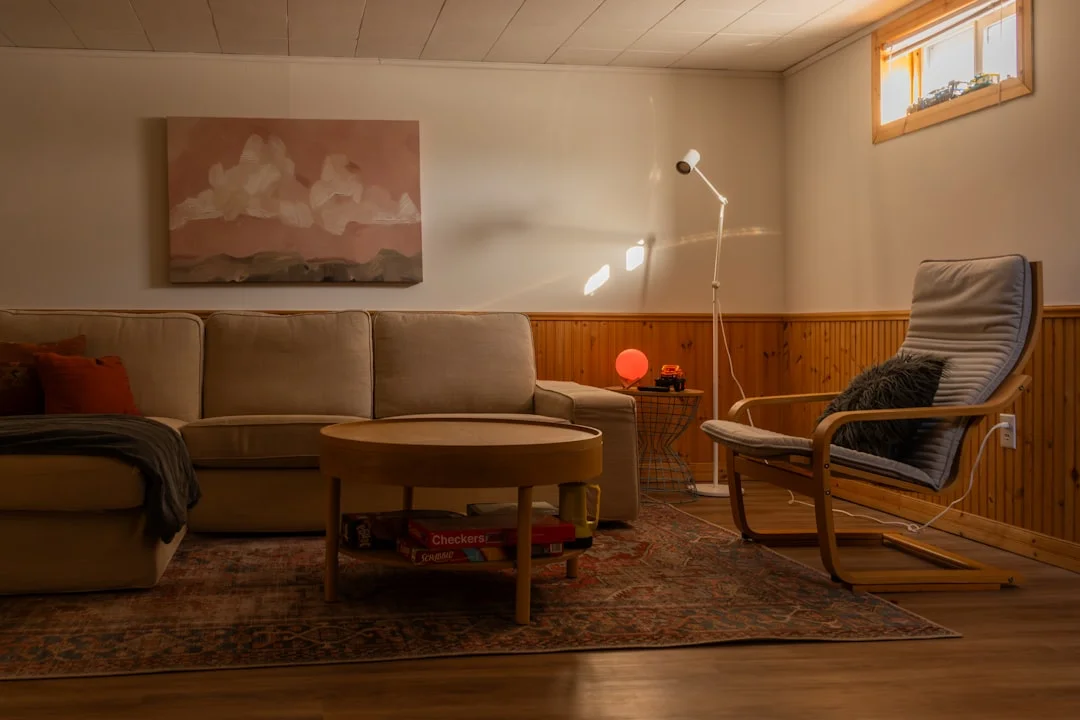
Core Concept
At its essence, the comfort of a space is governed by the quality and flow of Qi, or vital life force energy. A comfortable living room is one where Qi can enter, circulate gently, and accumulate without becoming stagnant or rushing away too quickly. This energy flow is influenced by everything from the room's layout and furniture placement to its colors, materials, and lighting. Think of Qi as air circulation or natural light; you cannot see it directly, but you feel its effects profoundly. A room with blocked corners, sharp furniture angles pointing at seating areas, or a chaotic arrangement creates turbulent or stuck Qi, leading to feelings of unease. In contrast, a space with a clear but not barren pathway, rounded shapes, and a defined yet open focal point allows for nurturing Sheng Qi, or "ascending energy," which fosters comfort and connection.
Traditional Feng Shui Perspective
Classical Feng Shui provides a structured framework for analyzing why certain spatial configurations feel inherently more supportive than others. It is a science of placement aimed at aligning human dwellings with natural forces. The principle of Yin-Yang balance is paramount. A living room should strike a harmony between active Yang energy and passive Yin energy. Too much Yang, created by excessive bright light, loud colors, high activity, and hard surfaces, can make a room feel overwhelming and stressful. Too much Yin, from dim lighting, cool dark colors, and excessive softness, can render a space lethargic and depressing. A balanced room might feature a vibrant painting (Yang) on a neutral wall (Yin), or a soft rug (Yin) under a solid wooden coffee table (Yang). The Five Elements theory further refines this balance. Each element—Wood, Fire, Earth, Metal, Water—carries specific qualities, colors, and shapes. A comfortable room contains a representation of all five in a productive cycle, avoiding elements that clash or dominate. For instance, a room overloaded with Fire elements (reds, triangles, excessive lighting) can feel aggressive. Introducing the Water element (blacks, blues, wavy forms, reflective surfaces) or the Earth element (yellows, squares, ceramics) can temper that energy and restore comfort. The placement of these elements according to the Bagua, or energy map, of the room can also address specific life areas, from family health to social joy. Qi flow and spatial harmony are meticulously considered. The main door, the "mouth of Qi," should have a clear, unobstructed view into the living room but not directly out a window or another door, which would cause Qi to rush through without benefiting the occupants. Furniture, especially sofas, should be placed in a commanding position, backing a solid wall with a wide view of the room's entrance, providing psychological security and stability. Sharp corners from walls or furniture, known as "secret arrows," should be softened, as they are believed to project cutting Sha Qi. The overall layout should feel protected and embracing, like a comfortable armchair, rather than exposed and vulnerable.

Modern Interpretation
Contemporary environmental psychology and design principles echo these ancient insights without using traditional terminology, focusing on the measurable impact of space on human cognition and emotion. From this modern viewpoint, a comfortable living room successfully supports our psychological needs for safety, social connection, and restoration. The Feng Shui "command position" translates directly to our innate preference for spaces where we can see approaching people (potential opportunities or threats) while having our back protected, a trait rooted in survival instincts. This positioning in a living room reduces subconscious anxiety and fosters relaxation. The flow of Qi aligns with the modern concept of circulation and visual permeability. A cluttered or awkwardly arranged room increases cognitive load, forcing our brains to work harder to navigate the space, which leads to mental fatigue and stress. A harmonious layout with clear pathways reduces this burden, promoting a sense of ease. Similarly, the balance of Yin and Yang correlates with sensory stimulation. Humans perform and feel best in environments with a moderate level of sensory input—enough to be engaging but not so much as to be overwhelming. The careful layering of texture, light, and sound in a comfortable room creates this optimal stimulation. Furthermore, the Five Elements find their counterpart in biophilic design and material psychology. The Wood element connects to our need for nature, explained by the biophilic hypothesis which states that exposure to natural forms, plants, and wood grains reduces stress. The Earth element's stability is achieved through low, horizontal furniture and earthy tones that ground us. Metal's clarity is mirrored in the use of organization and decluttering to reduce anxiety. In essence, a comfortable living room is one that is not just aesthetically pleasing but also psychologically attuned, promoting well-being, facilitating positive social interactions, and serving as a true sanctuary from the outside world.
Insights
- Position your primary seating against a solid wall facing the room's entrance to satisfy a deep-seated psychological need for security and a commanding view of your environment.
- Incorporate a balanced mix of the five elemental qualities—such as wood furniture, a metal lamp, an earthy-toned rug, a candle for fire, and a glass vase for water—to create a visually and energetically complete sensory experience.
- Ensure a gentle, meandering pathway for movement through the space, avoiding both cramped clutter and barren emptiness, to encourage a relaxed and welcoming atmosphere for both residents and guests.
- Soften sharp corners and edges on architectural features or furniture with plants, drapes, or rounded decor to eliminate subconscious visual threats and promote a feeling of safety.
- Layer your lighting with multiple sources at different heights, such as floor lamps, table lamps, and overhead fixtures, to avoid harsh shadows and create a flattering, adaptable ambiance for any activity.
Conclusion
The comfort of a living room transcends mere decoration; it is the tangible result of intentional design that harmonizes with both natural principles and human psychology. The ancient art of Feng Shui and modern environmental science, though separated by centuries, converge on a universal truth: our spaces are not passive containers but active participants in our lives. By understanding the flow of energy, the balance of opposites, and the interaction of elemental qualities, we can consciously shape our living rooms into environments that do not just look good but truly feel good. They become nurturing hubs that support our well-being, foster connection, and provide a genuine sense of sanctuary and comfort.