The colors that surround us in our workspace are far more than mere decoration; they are a constant, silent dialogue with our subconscious, influencing our energy, focus, and emotional state. In the practice of Feng Shui, color is a potent and accessible tool for manipulating Qi, or life force energy, to cultivate an environment that supports productivity, creativity, and professional growth. By understanding the symbolic language and energetic properties of color, we can intentionally design a workspace that not only looks appealing but actively works to improve our work energy, reduce stress, and foster harmony. This approach moves beyond personal preference to engage with universal principles of balance and elemental interaction, offering a strategic method to enhance our daily professional experience.
Core Concept
In Feng Shui, color is intrinsically linked to the Five Elements theory—Wood, Fire, Earth, Metal, and Water. Each element governs specific aspects of life, emotions, and types of energy, and is represented by a spectrum of colors. Applying these colors in a workspace is a method of inviting the qualities of that element into your environment to correct imbalances and stimulate desired outcomes. The core concept is not about painting an entire room a single color, but about creating a dynamic, balanced palette that supports the specific energy needed for work. For instance, the Fire element fuels passion, dynamism, and recognition, making its colors excellent for roles requiring visibility and leadership. The Wood element promotes growth, planning, and vitality, ideal for project development and team expansion. The key is to understand what your work primarily demands—is it focused concentration, collaborative brainstorming, or authoritative decision-making? The colors you choose should serve that function. A real-life example is a corporate brainstorming room accented with vibrant greens (Wood) to stimulate new ideas and growth, balanced by touches of white (Metal) to provide clarity and structure to those ideas. Conversely, a home office for detailed accounting work might benefit from dominant earthy neutrals (Earth) for stability, with small accents of blue (Water) to support the flow of meticulous tasks.
Traditional Feng Shui Perspective
From a classical standpoint, color application is a precise art guided by the balance of Yin and Yang and the productive cycles of the Five Elements. Yin colors are typically darker, cooler, and more subdued, promoting calm, introspection, and deep focus. Yang colors are brighter, warmer, and more stimulating, encouraging activity, communication, and expansion. A harmonious workspace requires a thoughtful blend of both. A room overly Yang with intense reds and oranges may lead to agitation and burnout, while a space too Yin with dark blues and blacks could foster lethargy and isolation. The Five Elements cycle is crucial for color selection. The productive cycle shows how elements support one another: Wood feeds Fire, Fire creates Earth (ash), Earth bears Metal, Metal collects Water, and Water nourishes Wood. In a workspace, you can use this cycle to create a supportive energy flow. For example, if your primary desk color is black or dark blue (Water), which supports wisdom and career flow, you could add accents of green (Wood) in a plant or desk accessory, as Water nourishes Wood, creating a cycle of sustained growth. Conversely, the destructive cycle must be avoided; too much red (Fire) in a space dominated by Metal colors (white, gray) can symbolically "melt" the Metal, potentially disrupting the precision and organization Metal brings. Directional theory also plays a role. Traditionally, different areas of a space correspond to different life sectors. The North is linked to the Water element and career, making blues and blacks auspicious there. The South connects to Fire and fame, suited to reds and purples. The East relates to Wood and family, favoring greens and blues. While modern applications are often simplified, this underscores the philosophy that color is not arbitrary but connected to the fundamental energies of a space.
Modern Interpretation
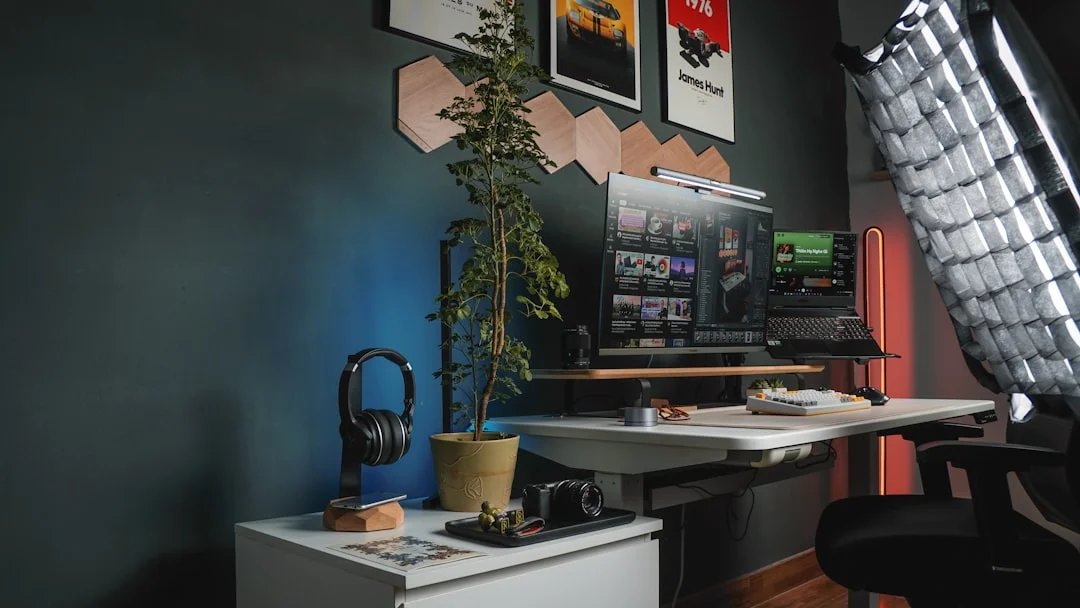
Modern environmental psychology provides a scientific lens that remarkably echoes ancient Feng Shui wisdom. Studies confirm that color directly impacts human psychology, physiology, and performance. The modern interpretation of Feng Shui colors is less about mystical energy and more about creating a behaviorally supportive environment based on these proven effects. It bridges the symbolic meaning of the elements with our contemporary understanding of how space influences mood, cognitive function, and behavior. For example, the Feng Shui association of blue (Water) with calm and communication aligns with psychological findings that blue hues can lower heart rate and blood pressure, fostering a tranquil environment conducive to focused, thoughtful work. The use of green (Wood) for growth and balance correlates with research showing green reduces eye strain and promotes a sense of restoration, crucial for long hours at a computer. Yellow, associated with Earth in Feng Shui for stability and clarity, is psychologically known to stimulate mental activity and generate feelings of optimism, though overuse can cause anxiety—a perfect reflection of the need for Yin-Yang balance. Practically, this means a modern professional can curate their workspace with intentionality. A neutral base of whites, grays, or beiges (Metal and Earth) can provide a clean, stable backdrop that reduces visual clutter and mental noise. Strategic accents then introduce specific energetic qualities: a red notebook or artwork for moments needing a boost of confidence (Fire), a live green plant for vitality and air purification (Wood), or a blue chair cushion for composed decision-making (Water). This approach makes Feng Shui a practical tool for environmental design, where color becomes a non-verbal cue that programs the space for specific work modes, from deep analytical work to creative ideation.
Insights
- Introduce vibrant green elements, such as plants or artwork, into the eastern or southeastern areas of your office to actively stimulate the Wood element's energy of new beginnings and prosperous growth.
- Balance the intense Yang energy of a bright red accent wall with ample Yin elements like a soft black chair, textured gray rug, or orderly shelving to prevent workplace tension and emotional exhaustion.
- Apply soft blues or deep blacks in the northern part of your workspace or on your desk accessories to enhance the Water element's flow, supporting career advancement and fluid communication.
- Utilize earthy tones like sandy beige or soft yellow on large furniture or walls to create a foundational sense of stability and mental clarity, which is essential for processing complex information.
- Incorporate metallic colors like white, gray, or silver through frames, lamps, or tech gadgets to introduce the Metal element's qualities of efficiency, precision, and focus into your daily tasks.
Conclusion
Improving work energy through Feng Shui colors is an integrative practice that combines ancient symbolic systems with modern psychological understanding. It moves beyond aesthetic choice to intentional environmental design, where each hue is selected to cultivate a specific quality of Qi—be it the calming flow of Water, the growth-oriented pulse of Wood, or the clarifying structure of Metal. The ultimate goal is to achieve a dynamic equilibrium where Yin and Yang, and the Five Elements, interact in a supportive cycle tailored to your professional needs. By thoughtfully applying this palette of energy, we transform our workspace from a passive container of activity into an active participant in our success, fostering an atmosphere where productivity, well-being, and harmony can naturally flourish.